
Sites Prepared for New Development Without Delays
Excavation and Demolition in Evansville for site preparation, grading, structure removal, and construction support
Excavation and demolition services from DJ Tree Service support residential and commercial projects across Evansville by removing existing structures, grading sites to required elevations, and preparing ground conditions for foundations, utilities, and construction staging. The work addresses projects ranging from residential additions requiring foundation excavation to commercial developments needing complete site regrading and old structure removal. Specialized equipment handles digging, material loading, concrete breaking, and debris hauling safely and efficiently, reducing project timelines and allowing construction crews to begin work on prepared surfaces without encountering obstacles or unsuitable soil conditions.
Excavation involves removing soil to specified depths for foundations, basements, or utility trenches, while demolition includes dismantling buildings, breaking and removing concrete slabs, and clearing sites of structural debris. Grading work levels surfaces, establishes drainage slopes, and compacts fill material to provide stable support for paving, buildings, or landscaping installed during later project phases.
Request a site assessment to review demolition requirements, excavation depths, and grading specifications before scheduling project work.
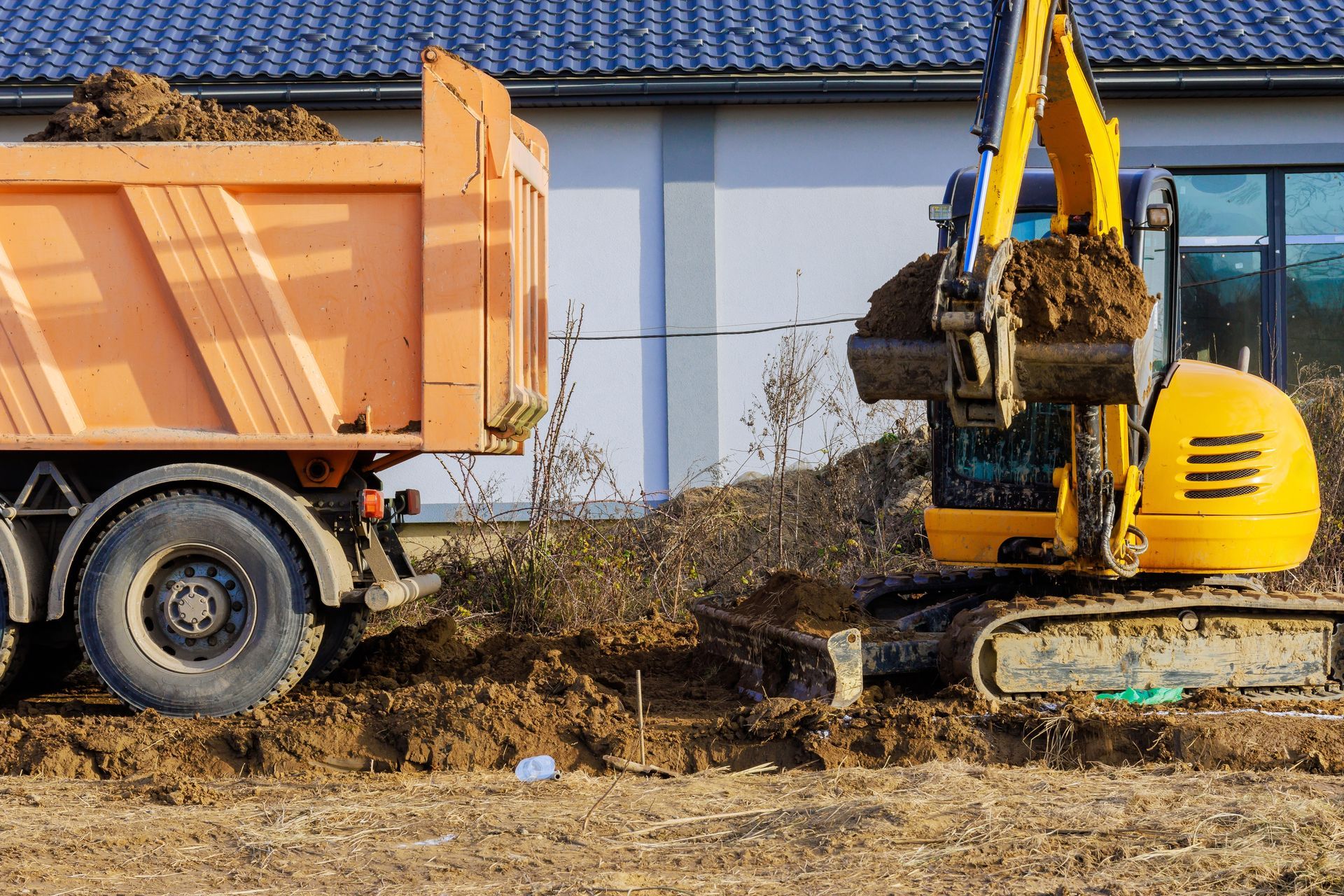
The Difference Between Excavation and Demolition
Excavation removes soil to create level building pads, dig trenches for utilities, or lower grade elevations for drainage improvements, using equipment that cuts, lifts, and hauls material while maintaining stable trench walls and safe working conditions. Demolition involves dismantling structures, breaking foundations, and separating materials for recycling or disposal, with attention to controlling dust, managing debris, and protecting adjacent structures or utilities from damage during removal. Both services require coordination with site plans, utility locations, and construction schedules to prevent conflicts and delays.
Once excavation and demolition are complete, you'll see level surfaces ready for construction without remnants of old structures, trenches dug to exact depths for utility installation, and graded areas that drain properly without low spots where water collects. Material is hauled off-site rather than piled in locations that block access or require secondary handling, and compacted surfaces support equipment loads without rutting or settling that complicates foundation work.
Projects may include foundation excavation, utility trench digging, site regrading for drainage correction, driveway or parking lot removal, building demolition, and debris hauling. Coordination with land clearing, pipe installation, and other site services allows entire projects to proceed without scheduling interruptions, and early planning addresses permit requirements, material disposal logistics, and weather considerations that affect equipment access and soil workability.
What Property Owners Usually Ask
Questions about excavation and demolition typically focus on safety protocols, material handling, and project coordination with other construction activities.
What site information is needed before excavation begins?
Survey data showing property boundaries, elevation requirements, utility locations, and soil conditions help determine excavation depth, equipment selection, and whether shoring or dewatering is required for safe digging.
How are utilities protected during demolition and excavation?
Underground utilities are marked by locating services before work starts, and excavation near marked lines is done carefully by hand or with vacuum equipment to expose and protect lines before machine digging continues.
What soil conditions in Evansville affect excavation methods?
Clay soils common in the region hold trench walls better than sandy soils but become sticky and difficult to move when wet, so timing excavation during dry periods improves efficiency and reduces equipment strain.
When should demolition and excavation occur in the project timeline?
Demolition should be completed before excavation to prevent debris from falling into dug areas, and excavation should finish before foundation crews arrive so concrete forms can be set immediately without waiting for final grading.
What determines whether excavated soil can be reused on-site?
Soil composition, contamination, and compaction requirements dictate whether material is suitable for backfill or grading, with clay-heavy soils often reused for berms and sandy soils exported if unsuitable for structural support.
DJ Tree Service provides excavation and demolition services for contractors, developers, and property owners managing site preparation and construction projects. Contact us to discuss your project scope, site conditions, and how excavation and demolition integrate with your construction schedule and overall development goals.