
Ground-Level Surfaces After Tree Removal
Stump Grinding in Evansville for obstacles left after removals that interfere with mowing and landscaping
Tree stumps create persistent obstacles once the tree is gone—they interfere with mowing patterns, prevent planting or construction in that area, and often become tripping hazards as they settle and decay unevenly. DJ Tree Service uses specialized grinding equipment to reduce stumps below ground level, eliminating the visible obstruction and allowing the space to be reclaimed for lawn, landscaping, or other uses. The process is faster and less invasive than full stump extraction, which requires excavation and leaves a large void that must be backfilled.
Grinding involves cutting the stump into wood chips using a rotating wheel with carbide teeth, working progressively deeper until the stump is reduced several inches below the soil surface. The resulting chips can be removed or left on-site as mulch, and the depression is typically filled with topsoil to level the area for seeding or sod installation.
Schedule stump grinding shortly after tree removal to restore full use of the area without waiting for natural decay.
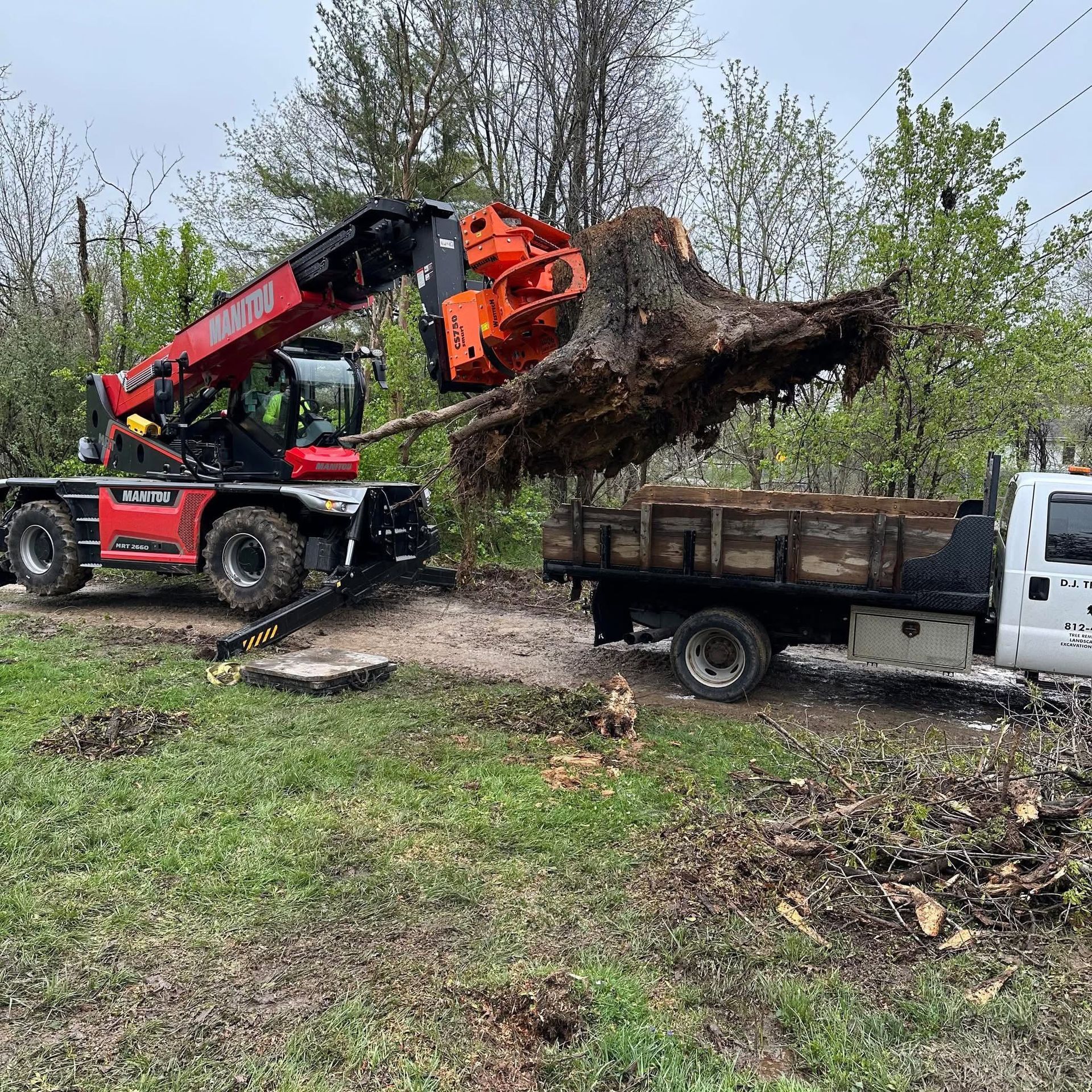
Why Stump Grinding Works for Property Restoration
Stumps decay slowly, often taking years to break down naturally, and during that time they attract insects, sprout new growth, and remain as immovable obstacles. Grinding removes the majority of the stump and surface roots quickly, cutting below the grass line so mowers and equipment can pass over the area without obstruction or blade damage.
After grinding is complete, you'll see a level surface where the stump previously sat, covered with wood chips or filled and smoothed with soil depending on your preference. The area becomes immediately usable for lawn equipment, and you can proceed with planting, landscaping, or construction projects that were previously blocked by the stump. Properties with multiple old stumps will notice a cleaner, more uniform appearance once those obstacles are removed and the lawn is restored.
Stump grinding does not remove the entire root system, which remains underground and decomposes over time. In most cases, surface roots within a few feet of the stump are also ground down, but deeper structural roots are left in place. If the area will be used for new construction or utility installation, additional excavation may be required beyond standard grinding depth.
Common Questions About This Service
Stump grinding often raises practical questions about the process, what's left behind, and how the site will look once the work is finished.
How deep does stump grinding go below the surface?
Most stumps are ground six to eight inches below grade, which is sufficient for lawn restoration and allows mowers to pass over the area without hitting remaining wood.
What happens to the wood chips created during grinding?
You can choose to have the chips removed, spread them as mulch in planting beds, or use them to fill the depression left by the stump before adding topsoil.
Why do stumps need to be removed if they're already dead?
Dead stumps attract wood-boring insects, send up new shoots if any live roots remain, and prevent use of the space for years while they slowly decompose.
When is the best time to grind a stump after tree removal in Evansville?
Grinding can happen immediately after removal or be scheduled separately, but addressing it sooner prevents the stump from hardening further as it dries, which makes grinding slower and more difficult.
What should I do with the area after the stump is ground?
Fill the depression with topsoil, compact it lightly, and seed or sod the area to match the surrounding lawn, or incorporate it into a landscaping project if you're redesigning that section of the property.
DJ Tree Service removes tree stumps across Evansville to eliminate obstacles and restore usable outdoor space. Contact the team to schedule grinding and prepare your property for replanting, lawn restoration, or future site improvements.